In Metro Honolulu's Older Condos, Is the Monthly Fee the Real Price?
November 5, 2026
November 5, 2026
Aaron Tangonan, president of the Honolulu Board of REALTORS, told Hawaii Business Magazine this year that maintenance fees can affect how much condo a buyer can afford. He said the trade-off can mean one bedroom instead of two.
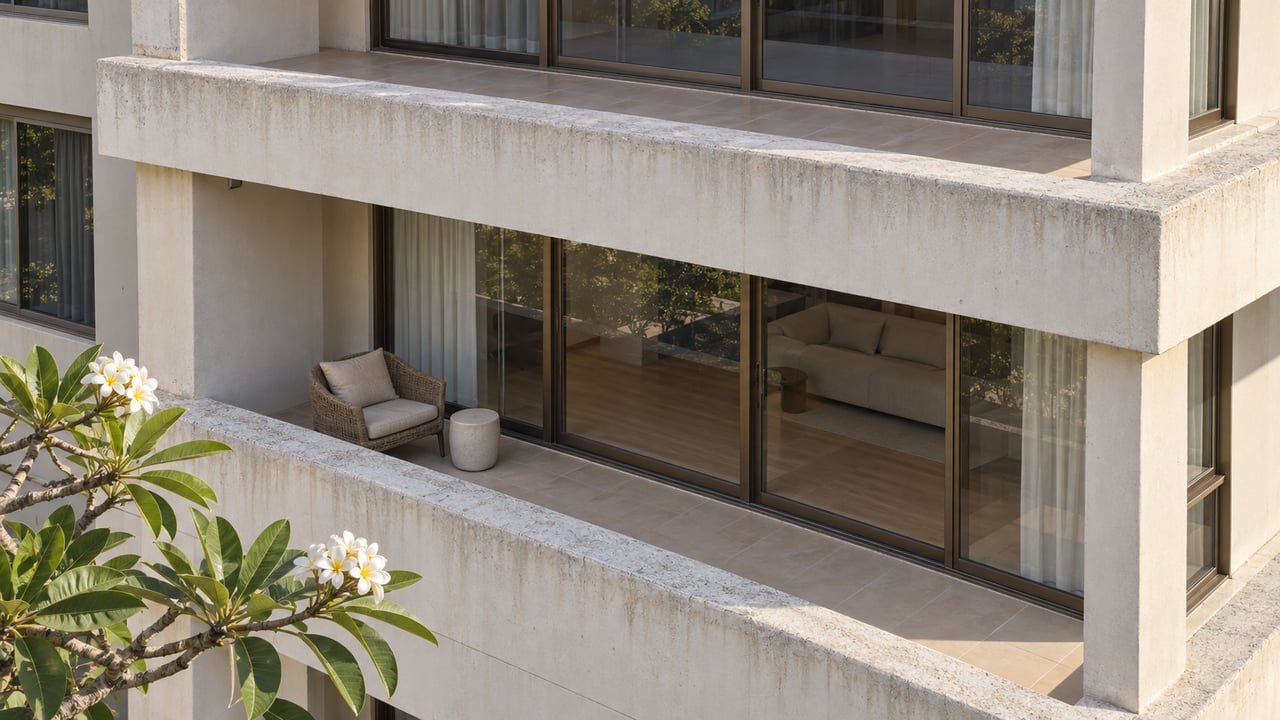
In a 1970s tower in Waikiki, Makiki or near Downtown, the building's maintenance fee adds to its monthly cost. The sales numbers for this fall look a lot like buyers have started doing that math.
In September 2026, the Oahu condo median rose 2.8% from a year earlier to $523,000, according to the Honolulu Board of REALTORS September report. On its own, that looks like a market holding firm.
Further down the same report, the picture changes. Closed condo sales fell 8.1% to 375. Sales between $200,000 and $599,999 fell 15.8%. Pending condo sales, the contracts that become next month's closings, dropped 28.6%, from 409 to 292. The steepest drop was in the $400,000 to $599,999 range, which fell 37.2% year over year.
Meanwhile, active condo inventory reached 2,509 listings at the end of September, up 7.8%. Of those, 1,196 listings, or 48% of the market, were priced under $500,000.
So the median rose because the slowdown landed hardest on the lower-priced units. That band holds much of Metro Honolulu's older high-rise stock, which tends to list for hundreds of thousands less than newer buildings. In the August 2026 report, the Board said condo buyers were factoring maintenance fees, insurance and reserve funding into their monthly costs. In September, Tangonan described buyers "taking more time to weigh borrowing costs and their options."
Hawaii Business compared two listings from mid-March. A 923-square-foot two-bedroom, two-bath at the Moana Pacific on Kapiolani, built in 2007, was listed at $775,000. A slightly smaller unit with a spacious lanai at Punahou Towers on Dole Street, built in 1973, was listed at $430,000.
That $345,000 gap looks like a bargain. Dues and assessments are also part of the comparison.
The same article lists fees on several early-1970s Metro Honolulu buildings:
| Unit described | Size | Monthly maintenance fee |
|---|---|---|
| Condo on Lunalilo Street, near the freeway | 600 sq ft | $1,316 |
| Cinderblock walk-up near the Japanese Cultural Center | 925 sq ft | $1,531 |
| Mid-rise unit on Ala Moana Boulevard in Waikiki | 959 sq ft | $1,715 |
For comparison, the average maintenance fee in Honolulu Board of REALTORS sales data was $1,051 in February 2026. Tangonan said condo fees have climbed 70% over the past decade, faster in the last three years.
Amanda McCann, a Realtor with Hawaii Modern Realty, gave Hawaii Business a Waikiki example: a nice two-bedroom for $550,000, a $1,400 HOA, and an expected assessment of at least another $300. That comes to close to $2,000 a month before the mortgage. She said listings like that sit on the market because of the fees.
The causes are physical, and most of them are specific to Honolulu. Jeff Sakamoto, a commercial real estate loan officer at First Hawaiian Bank who works with condo associations on repair loans, told Hawaii Business that cast-iron drain pipes, which last a century in some climates, are failing here after three or four decades. Exposed, unpainted concrete absorbs water and cracks, which leads to expensive spalling repairs. Elevator modernization, new roofs and fire-sprinkler installations are also on the list.
Tangonan described how these costs feed each other: "When repairs are delayed, costs rise and drive up insurance premiums for the building, which then leads to high condo fees, creating a cycle."
That is why a low fee in an old building can be a warning sign too. It may mean the association has deferred work and will need to collect for it later.
The master insurance crisis, the one that put Hawaii condos on lender watch lists in 2025, has mostly eased. The state reopened the Hawaii Hurricane Relief Fund on June 24, 2025. By early March 2026 it had written 98 policies covering $2.38 billion in insured value, according to Insurance Commissioner Scott Saiki as quoted by Hawaii Business. One 44-story condo in urban Honolulu saw its hurricane premium fall from $266,000 to $143,000.
The fund provides hurricane-only excess coverage for associations that have been turned down by at least two Hawaii-licensed insurers. The building's insured value must exceed $10 million, and private coverage has to carry the first $10 million. Coverage tops out at $140 million. The state describes the coverage as compatible with Fannie Mae and Freddie Mac requirements, though that does not make every building eligible for financing.
Financing has improved as well. Saiki said one local lender told him it had 190 underinsured condo projects at the height of the crisis and that only 33 still were.
The article also says stabilized premiums have let associations put the savings toward maintenance. For a buyer, lower insurance costs should not be read as a sign that fees will fall. In many older towers that money is already going to pipes and concrete.
The City and County of Honolulu Fire Code includes dates for fire and life safety evaluations under Ordinance 18-14. Here are dates in the code:
In practice, total monthly costs can differ from list prices. The examples above show two costs buyers weigh:
September's other numbers show how the condo market has changed. Condo inventory is up. Median days on market held at 41, compared with 40 a year earlier. Still, 12% of condo sales closed above the original asking price, up from 8%. Well-maintained buildings with predictable fees still get competition. The buildings that sit tend to be the ones where buyers cannot tell what the next few years will cost.
Did the insurance fix lower condo fees in older buildings? It lowered premiums in some buildings. The 44-story urban Honolulu example fell from $266,000 to $143,000. Hawaii Business reported that associations are putting those savings toward maintenance, so fees may not drop by the same amount.
Why did the condo median rise if fewer people are buying? In September 2026, sales and pending contracts fell most in the lower price bands, especially $400,000 to $599,999. With fewer of those sales in the mix, the median moved up.
This post is general information, not legal, financial or insurance advice. Check the specifics of any building and your own loan with the association, your lender and the right licensed professional.
If you are comparing older Metro Honolulu towers and want help looking at a building's fee history alongside its asking price, Artie Wilson & Associates can discuss the buildings on your shortlist. Request a free home valuation or market consultation.
Stay up to date on the latest real estate trends.