Maunalua Bay's Channel Was Dredged for Boats. The Sand Went to the Beach.
November 12, 2026
November 12, 2026
For about twenty years, boaters leaving the Maunalua Bay ramp watched the entrance channel get shallower and paid for it in propellers. Brendt Chang, a boater and community advocate, told Hawaii News Now that propellers had been getting damaged in the shallow water and that the channel had needed dredging for two decades.
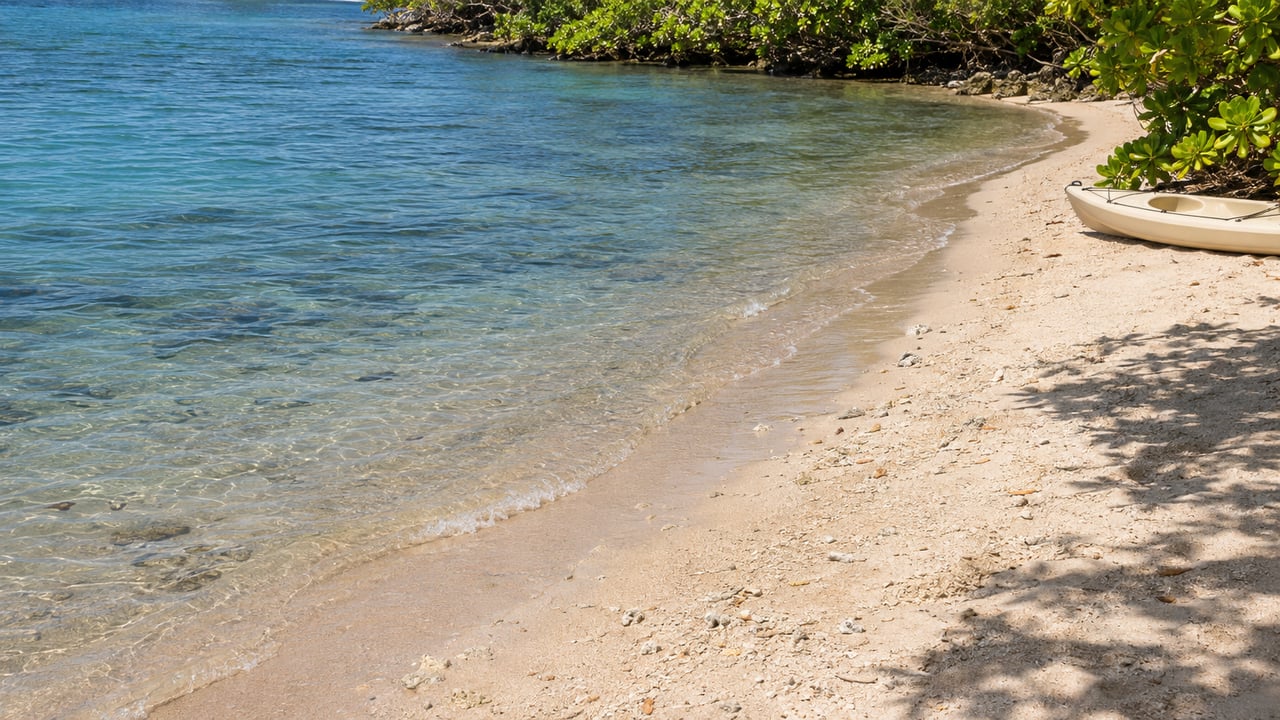
When the state finished the job in February, though, Chang talked about the beach first. "We renourished Hui Nalu's area and we built this keiki beach here for the children, the people of Hawai'i Kai," he said in the same report. That's the clearest way to read the project nine months on. The money was justified by navigation. Because the state chose to keep every load of sand inside the bay, most of what has changed along the shoreline at the ramp is for people who never launch a boat.
Henry Kaiser's crews cut the Maunalua Bay entrance channel in the 1960s. According to Hawaii News Now, this year's work was its first dredging since then. Crews took 5,000 cubic yards of material out of the channel.
The contractor, American Marine Corp., started work in late July, and Aloha State Daily reported that the state didn't plan to fully close the ramp or the channel during the work. The job came in early. The state's Division of Boating and Ocean Recreation had estimated completion in April and finished two months ahead of that, with a blessing at the ramp on Thursday, Feb. 19.
The DLNR completion notice lists what the project delivered:
Two of those five items are about boats. The rest change the shoreline around the ramp, and the last three all depend on the same decision.
Dredging projects often truck their sand inland and dump it. Here, DLNR placed the dredged sand on the eroded shorelines on both sides of the ramp. Officials told Aloha State Daily that this cost less and kept the sediment in the natural coastal system. "The true benefit of reusing the dredge sand is that we keep the sand within the littoral system and not disposing it elsewhere," DLNR communications specialist Ryan Aguilar told the outlet.
It also saved money. Staff estimated that reusing the sand locally saved about $300,000 compared with hauling it away and disposing of it upland. Boater input, seafloor depth surveys and sediment transport modeling guided where sand came out and where it went.
That's how a channel project produced a keiki beach. The sand had to go somewhere, and the cheapest place that kept it in the bay was the shoreline next to the ramp. There, according to DLNR, it also made room for more parking and a larger canoe storage area. Finn McCall, who heads DOBOR's engineering branch, listed the beneficiaries in the Hawaii News Now coverage as canoe paddlers, recreational and commercial fishermen, recreational boaters and beachgoers.
Hui Nalu Canoe Club works out of the canoe hālau at Maunalua Bay, and its area was one of the stretches the sand renourished. Bobby Hastings, a Hui Nalu coach and board member, told Hawaii News Now that the gains reach past his own club:
"It's really enhanced the space, the accessibility of the space. It's really helped out all the clubs not just our club but the paddling community as a whole."
The same report said the club's coaches expect the extra room to let more people take up the sport.
This is the part of the year when that room is easiest to try. Hui Nalu's Off Season Paddling runs October through December and again January through March, and it's included with membership. First-time paddlers are welcome on the second and fourth Fridays of each month. They need to sign a waiver online and pay dues before getting in a canoe, and the club keeps a limited supply of paddles to lend. The fall distance season also ran through the bay this year. The Oahu Hawaiian Canoe Racing Association's 2026 schedule listed the Hawaiʻi Aloha race on Oct. 24, starting at Maunalua Bay and finishing at Mauliola.
With the ramp work done, the bay's season includes two restoration workdays this month, a boat parade at the marina in December and paddling that runs all winter. Here's what's scheduled from now into spring:
| When | What | Where | Before you go |
|---|---|---|---|
| Tue., Nov. 17 | Mālama Maunalua rain-garden workday | Koko Head District Park | Mālama Maunalua's calendar lists it as open, with RSVP by email |
| Sat., Nov. 21, 9 a.m.–noon | Huki Day, invasive algae removal | Kuliʻouʻou Beach Park | Hosted by Hawaiian Electric employees and volunteers. Confirm sign-up details first |
| Sat., Dec. 19 | Christmas Boat Parade | Hawaii Kai Marina | Listed by the Hawaii Kai Marina Community Association |
| Oct.–Dec. and Jan.–Mar. | Hui Nalu Off Season Paddling | Maunalua Bay canoe hālau | Newcomers on 2nd and 4th Fridays |
The Huki Day continues the bay's best-known cleanup. During the Great Huki, from 2009 to 2011, volunteers and staff pulled more than 3 million pounds of invasive limu off 27 acres of coastline. Hawaiian Electric's listing says volunteer workdays still carry that effort forward, bringing together schools, community organizations and individuals.
Late winter adds a fishing event. Mālama Maunalua's Eat the Invaders tournament ran Feb. 27 through March 1 this year. Aloha State Daily reported that more than 50 teams removed 2,916 invasive fish, and the final-day fish fry was free and open to the public.
The channel work also points ahead. The project targeted a minimum depth of 6 feet below mean lower low water. DOBOR told Aloha State Daily that it and the boaters would keep monitoring depths after completion, and that a post-project depth survey would be available on request.
Because the channel went sixty years between its creation and its first dredge, officials have no historical data to predict when it will need the next one. DOBOR said dredging isn't a one-time fix. Waves, currents and storms will keep moving sediment, and future dredging will happen as needed to keep access safe. For anyone who fishes or boats out of the ramp, that survey is the practical baseline. When the state dredges again, the decisions this project made about where to put the sand give the next crew a working model.
Maunalua Bay's project is finished. The other big shoreline repair in East Honolulu is still in progress. The City is replacing the 35-year-old sewer system that serves the beach-level and parking-lot comfort stations at Hanauma Bay Nature Preserve. The $1,823,000 contract went to Jas W. Glover Limited, with design consultation by SEY Engineers Inc. The first closure ran Aug. 3 through Aug. 18. The City expects a second closure at the beginning of 2027, when the new lift station comes online, and plans to finish in summer 2027. The contractor schedules work on Mondays and Tuesdays, the preserve's regular closure days, whenever it can.
Until then, the routine is unchanged. Hawaiʻi residents with valid Hawaiʻi photo ID get in free without a reservation. The preserve is open Wednesday through Sunday, admits visitors from 6:45 a.m. to 1:30 p.m., clears the beach at 3:30 p.m. and closes Christmas Day and New Year's Day. Resident parking is $1 in cash, and a reservation doesn't hold a parking stall. Check the City's Hanauma Bay page for the 2027 closure dates before planning a January visit.
Farther along the Kaiwi coast, DLNR scheduled repairs at the Makapuʻu upper lookout, the viewing area north of the main lookout, from Oct. 21 through Nov. 7. The Makapuʻu Lighthouse Trail and its parking lot stayed open throughout. The contractor was Abhe & Svoboda, Inc. DLNR's park notices page has the current status of the upper lookout.
At Artie Wilson & Associates, we follow changes like the Maunalua Bay ramp work because they shape how a Hawaii Kai shoreline gets used year to year. If you own near the bay and want to talk through how this year's work fits the value of your home, request a free home valuation or market consultation and we'll go through it with you.
Stay up to date on the latest real estate trends.