On Kahala Avenue, The Shoreline Question Comes Before The Price Question
September 3, 2026
September 3, 2026
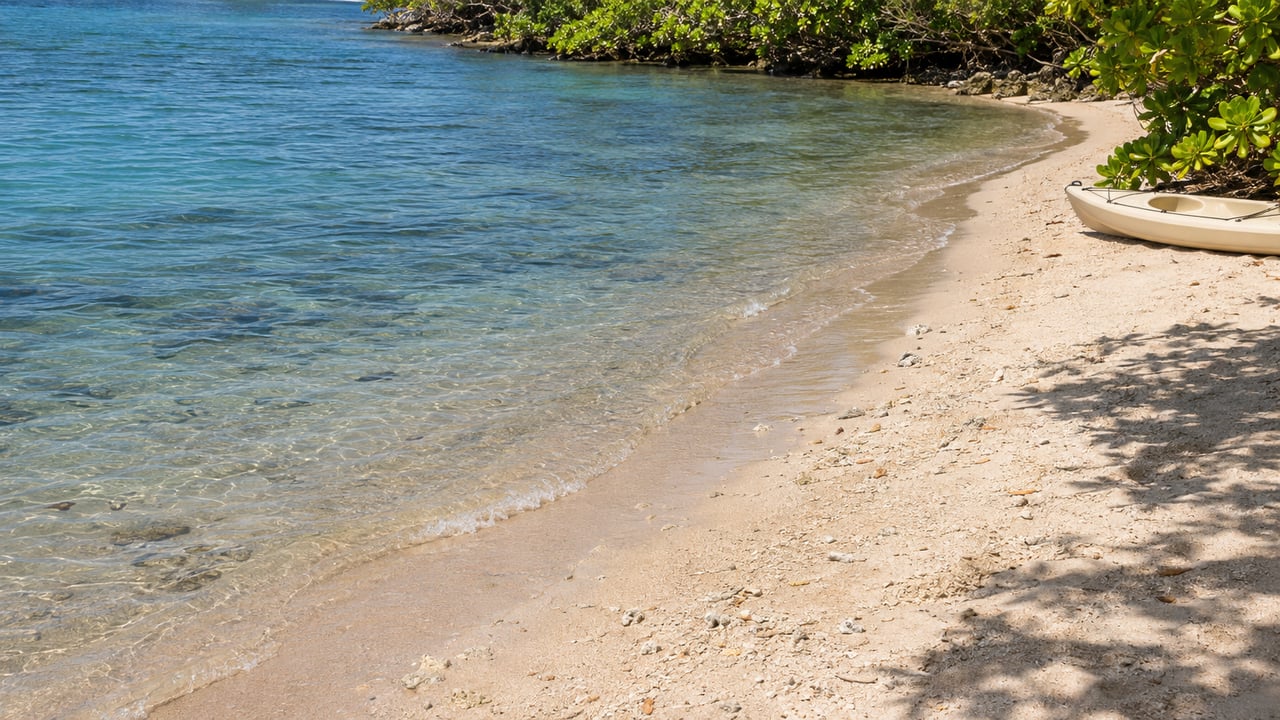
The Honolulu Star-Advertiser reported that walking the public path to the beach near Hunakai Street takes you past what used to be a stand of palm trees, planted as landscaping for a mansion built in 1971. What is left now is a cluster of stumps and root balls, tangled with broken irrigation pipe, sitting where sand used to be. The ocean took the rest. It also cut off a section of what was once a continuous walkable beach, forcing people to wade through knee-deep water to get around it.
That scene, on one of the most valuable residential streets in the state, is not an isolated hazard. It points to a legal question that can matter when shoreline owners consider future construction: where, exactly, does a property end and the public shoreline begin, and is the certified survey current enough for permitting? On this street, the answer can shape a sale alongside square footage, view corridor, and asking price.
In 2026, the state Department of Land and Natural Resources sent notices to at least eight beachfront owners along Kahala Avenue, warning that structures on their properties, pool edges, fencing, concrete rubble, stairs, irrigation piping, had been left exposed and encroaching onto the public beach as the shoreline moved inland. The notices went out between February and May, covering estates and vacant lots worth close to or more than $10 million apiece. Several more owners further down the avenue, some based as far away as Singapore, Japan, and California, show the same kind of obstruction without a notice yet attached to their names.
This is not a new problem showing up all at once. Two addresses on the same street show how long it has been building. At 4615 Kahala Avenue, a prior owner was notified of shoreline violations in 2015, 2018, and 2021, and was eventually forced to remove erosion barriers that DLNR had approved back in 2009 as a temporary fix. That owner had bought the property in 1999 for $3.8 million and listed it for sale in 2022 at $14.2 million. Down the block at 4623 Kahala Avenue, owned by a corporation called Asagami and chaired by Tomomi Kimura, DLNR correspondence on shoreline violations goes back to August 2005. A cable fence permitted in 1992 eventually ended up sitting inside the setback area as the beach eroded around it. By June 2024, a joint inspection by DLNR and the Honolulu Department of Planning and Permitting found that the fence, along with what inspectors called unauthorized erosion control material, had collapsed into the ocean. The notice of violation gave the owner 21 days to clear it, backed by a fine of up to $100,000 plus $10,000 a day until it was resolved.
| Year | Address | What Happened |
|---|---|---|
| 2005 | 4623 Kahala Ave | DLNR opens its first conservation district file on the property |
| 2009 | 4615 Kahala Ave | DLNR approves temporary erosion barriers as a stopgap |
| 2015 | 4615 Kahala Ave | Owner notified of continuing shoreline violations |
| 2018 | 4615 Kahala Ave | Owner notified again |
| 2021 | 4615 Kahala Ave | Owner ordered to remove the temporary barriers DLNR had approved |
| 2024 | 4623 Kahala Ave | Joint DLNR/DPP notice after fence and erosion controls collapse into the ocean; fines up to $100,000 plus $10,000/day |
| 2026 | At least 8 addresses | New round of DLNR notices sent along the avenue between February and May |
The house at 4615 Kahala Avenue was listed for roughly 3.7 times its 1999 purchase price in 2022, right through the same years its owner was fielding shoreline violations. The shoreline problem never went away. Both things were true at once, and a buyer doing real diligence would have needed to understand both.
The Honolulu Star-Advertiser quoted coastal engineer Mike Foley describing what's happening along this stretch of beach: "The erosion has been accelerating, and it is unrelenting." His firm is helping one owner design a vegetated dune at the water's edge, a softer alternative to the seawalls and barriers that created the problem in the first place. Much of Kahala was originally built on sand dunes that got flattened and hardened for landscaping decades ago, and removing that natural buffer is part of why the erosion keeps compounding on itself.
Here is the part that changes the math for anyone thinking about a future rebuild, not just a current sale. According to Cades, for years, Honolulu's shoreline setback line sat a flat 40 feet inland from the certified shoreline. In March 2023, Mayor Rick Blangiardi signed two ordinances, 23-3 and 23-4, that rewrote that number. Effective July 1, 2024, lots within urban Honolulu carry a 60-foot setback at minimum. Lots elsewhere on Oahu can be pushed back as far as 130 feet, depending on the property's documented history of coastal erosion. Once a shoreline is certified and a setback line is drawn from it, that line cannot move back toward the water on a future survey, only further inland.
The second ordinance matters just as much for oceanfront owners. It broadened the legal definition of "development" to include the construction or reconstruction of a dwelling of any size on a shoreline lot, or one that's been affected by wave wash, storm surge, high tide, or erosion. A buyer might assume a full teardown-and-rebuild on a lot like these is always an option on a property this valuable.
It changes what happens the next time someone wants to rebuild a structure that sits inside the newer, wider setback zone. A house built decades ago under the old 40-foot rule can end up sitting partly inside the current setback area without anyone having done anything wrong. It is simply where the line landed once the beach moved and the ordinance changed underneath it.
There is also a paperwork detail that trips up more sales than people expect. The Honolulu Department of Planning and Permitting says a shoreline survey only counts as "certified" for permitting purposes if it was certified by the state within the past year. An owner who had a survey done in 2022 cannot lean on it today. If a rebuild, a variance request, or even a straightforward buyer question about buildable envelope comes up during escrow, an outdated survey means starting the certification process over, and that process involves site inspections and state review that do not move quickly.
None of this means Kahala Avenue is a bad place to own or sell property. It means the questions a serious buyer's team asks have changed. A well-advised buyer, or their lender's appraiser, is now going to ask when the certified shoreline survey was last updated, whether the seller has received any DLNR or DPP correspondence, and whether the current setback line leaves meaningful room to rebuild if that ever becomes the plan. A seller who can answer those questions cleanly moves through escrow faster than one who cannot, regardless of how the house itself shows.
Before listing an oceanfront or near-oceanfront property in this area, it is worth working through a short list:
The reason this friction carries more weight on Kahala Avenue than in most Oahu neighborhoods comes down to what's actually being bought. Recent oceanfront listings in this stretch have offered well over 100 linear feet of beach frontage on lots exceeding an acre, with asking prices well into eight figures. The broader Waialae-Kahala area, inland streets included, has carried a median home price above $2 million, with beachfront estates regularly trading between $5 million and $15 million or more. At that price level, every linear foot of usable, buildable, defensible land carries real weight in the number a buyer is willing to sign for. A documentation gap that would be a minor inconvenience on a median-priced home elsewhere on Oahu becomes a genuine pricing conversation here, because the asset being sold isn't just a house, it's a specific, measurable amount of oceanfront that both sides need to agree on before they agree on a number.
Does this only affect homes right on the sand? The certified shoreline and setback rules apply specifically to shoreline lots and properties affected by wave wash, storm surge, or erosion.
What is "flanking" and why should a buyer care about it? When one property owner hardens their shoreline with a seawall or barrier, the erosion that structure blocks often shifts and intensifies at the neighboring lot instead of stopping. A buyer evaluating one property should look at what the properties on either side have done to their own shorelines, since that history can shape what happens next door.
If you own property along Kahala Avenue or elsewhere in the Diamond Head area and you're weighing a sale, this is exactly the kind of groundwork that's worth doing before a listing goes live rather than after an offer comes in. Artie Wilson & Associates has spent decades working through the specific paperwork and permitting questions that come with Kahala's oceanfront estates. Request a free home valuation or market consultation and we'll walk through what your property's shoreline history actually means for your sale.
This article is general information, not legal, tax or financial advice. Consult a qualified professional about your situation.
Stay up to date on the latest real estate trends.